At the start of 2025 Chris was awarded a grant of just over £2,000 from the School of Psychology’s Research Division to recruit a research intern as part of the Reading Internship Scheme. The intern was joining the lab to help run participant recruitment and testing, along with initial data analysis for a powered pilot study investigating whether it would be possible to significantly frustrate someone by having them complete a deceptive word search.
Finding the Unfindable
While the lab places an emphasis on investigating the effect of swearing on pain, most people are more likely to say a swear word in response to a frustrating situation. Think of the last time you had an unexpected item in the bagging area! As a result, we are planning to investigate whether the effects of swearing on pain already reported replicate to frustration, too. Essentially, does swearing make you less frustrated? Before we can get started, though, we needed to establish whether our plan to use a deceptive word search really would work to reliably frustrate people.
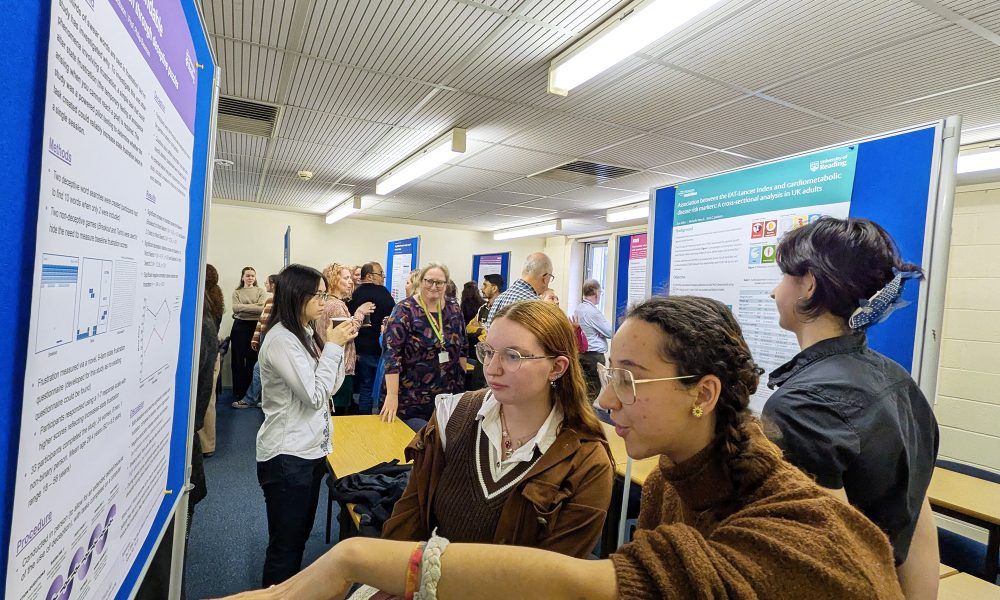
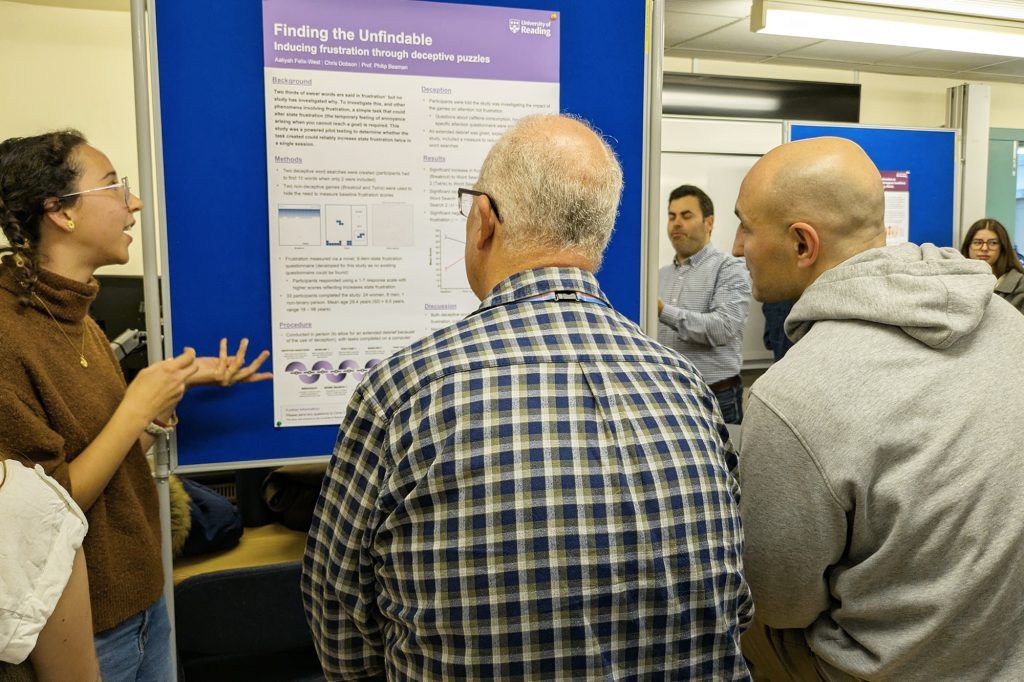
Aaliyah running members of the University of Reading's Chemistry department through her poster
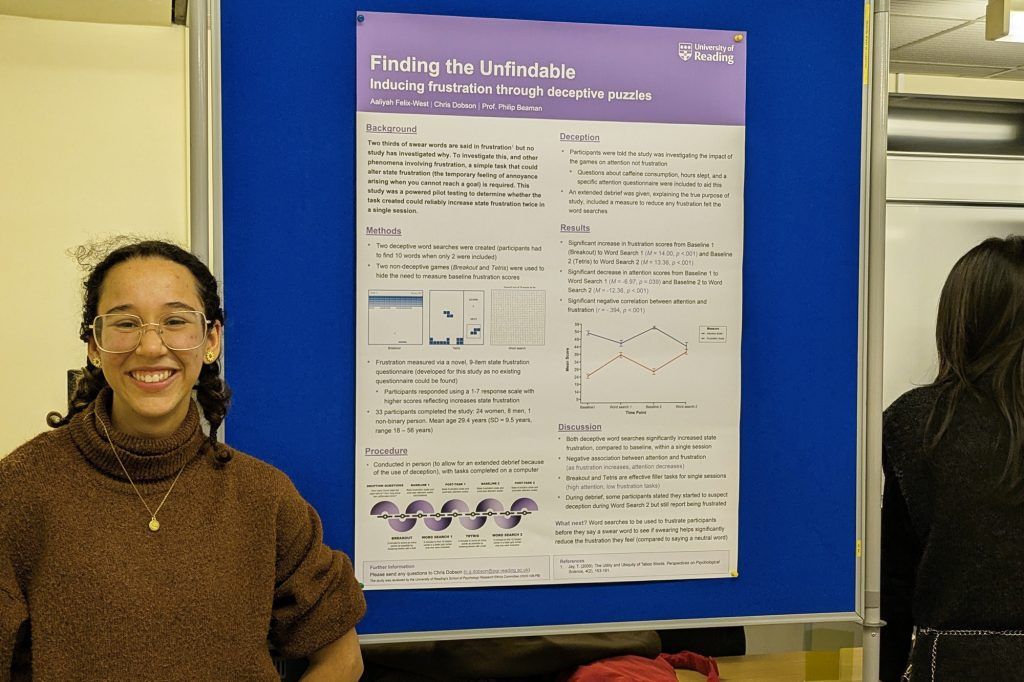
Aaliyah Felix-West came on board and over the course of June and July they recruited 33 people (the lure of a £10 Amazon voucher probably helped get them to sign up) to complete a study they thought was investigating how different games impacted attention. The 33 people played two arcade games (Breakout and Tetris) as well as completing two different word searches (one with familiar words, kitchen items, and one with unfamiliar medical terms) completing questionnaires measuring attention and frustration after each. The key point, however, is that while they were told each word search contained 10 words to find, in reality only two were present.
Results found that participants frustration level significantly rose after completing the first word search and then again after completing the second word search. This was the exact result we were looking for as it means we can use the task to reliably frustrate someone twice in one session — allowing us to compare the effect of a swear word and a neutral, control word on someone’s frustration level during the same testing session. In fact, a really nice finding from the pilot study was the negative relationship between frustration and attention, as this hints towards wider implications for studies that rely on simple arcade style games as filler tasks during experimental designs, that any frustration you unexpectedly illicit in participants risks causing them to disengage with your study.
Aaliyah with her poster at the 2025 Reading Internship Scheme Poster Conference
At the end of the internship Aaliyah was offered the chance to present the findings of the pilot study at an interdisciplinary conference attended by staff and students from across the University of Reading. For an hour, Aaliyah ran people through the study, fielded their questions, and explained that we really did get ethical approval to not only deceive people but also frustrate them in the name of science!
While Aaliyah’s internship has come to an end (they are now completing the final year of their degree and conducting research into how people’s ability to form mental images relates to the type of inner speech people engage in and how the autistic traits a person has plays into this) they have been a welcome member to the swearing lab and we wish Aaliyah well in everything they do next (which we hope might be back in the swearing lab one day!)
Share Article
Content notice
This website discusses the science and psychology of swearing.
As a result, you may encounter words that some people find rude,
offensive, or upsetting.