

Two Ways We Speak: What Swearing Reveals About the Brain

Language often feels like a single, unified ability. We think of something to say, and then we say it. However, research suggests that speech is not one limited to a single system, but relies on at least two. A useful distinction to see this comes from the difference between propositional speech, which is deliberate and structured, and non-propositional (automatic) speech, which is more spontaneous and emotionally driven. And one of the clearest example of the two types of speech is expressive swearing.
Propositional speech is mostly associated with communication. It involves constructing sentences intentionally, selecting words based on meaning, and organising them according to grammatical rules. When someone explains the design of an experiment or the results of their study, they are engaging in propositional speech. Their speech is structured, goal-directed, and designed to convey specific information.
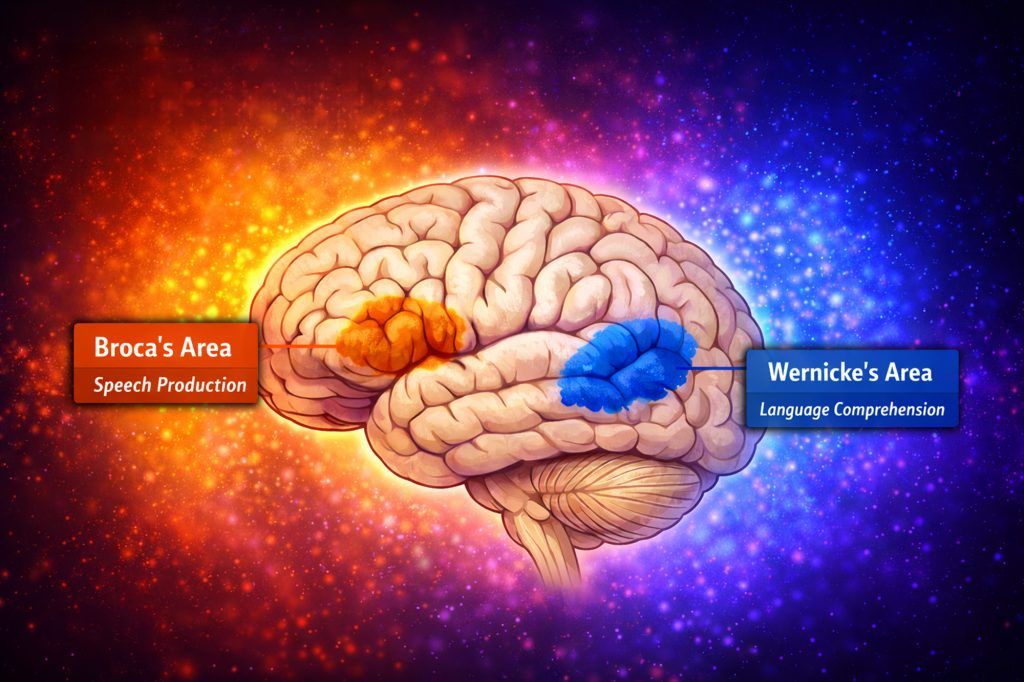
Neuroscientifically, propositional speech is strongly associated with regions in the left hemisphere of the brain. In particular, Broca’s area is involved in the production of structured speech, while Wernicke’s area plays a key role in language comprehension. We know this because damage to these areas, such as following a stroke, can result in individuals struggling to produce fluent or meaningful speech, a condition known as aphasia (Goodglass, 1993).
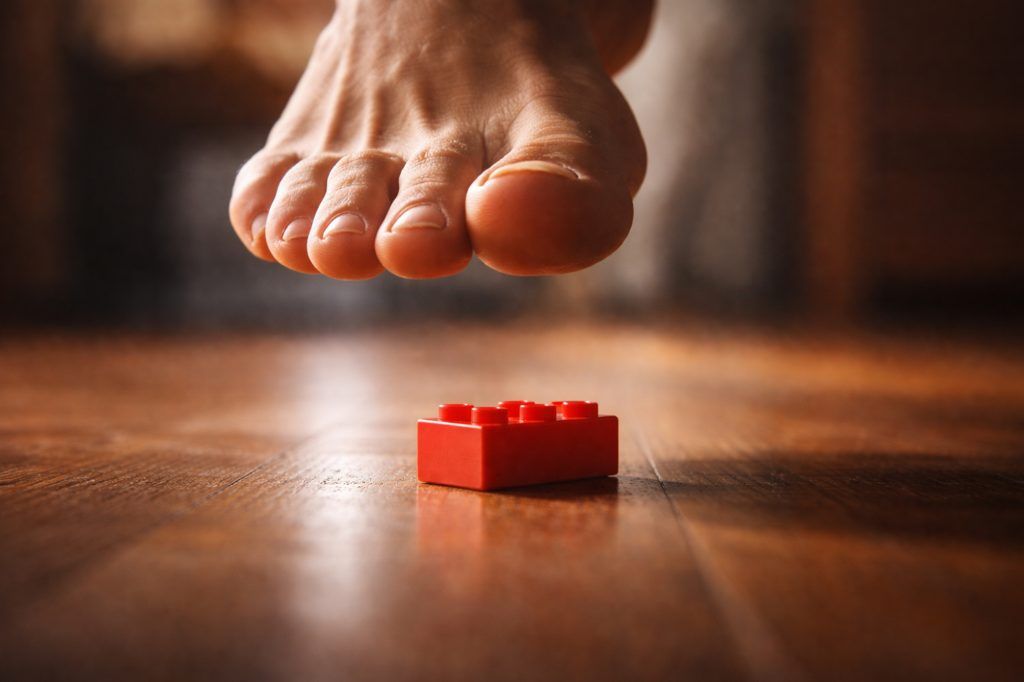
In contrast, non-propositional speech refers to forms of language that are not constructed in the same deliberate way. Instead, they are produced automatically and are often closely tied to our emotions. This includes brief emotional exclamations, those over-learned phrases we fall back on, and, importantly, swearing. When you stand on a block of Lego and immediately swear, that is non-propositional language. It is rapid, reflexive, and appears to be triggered with little conscious control.
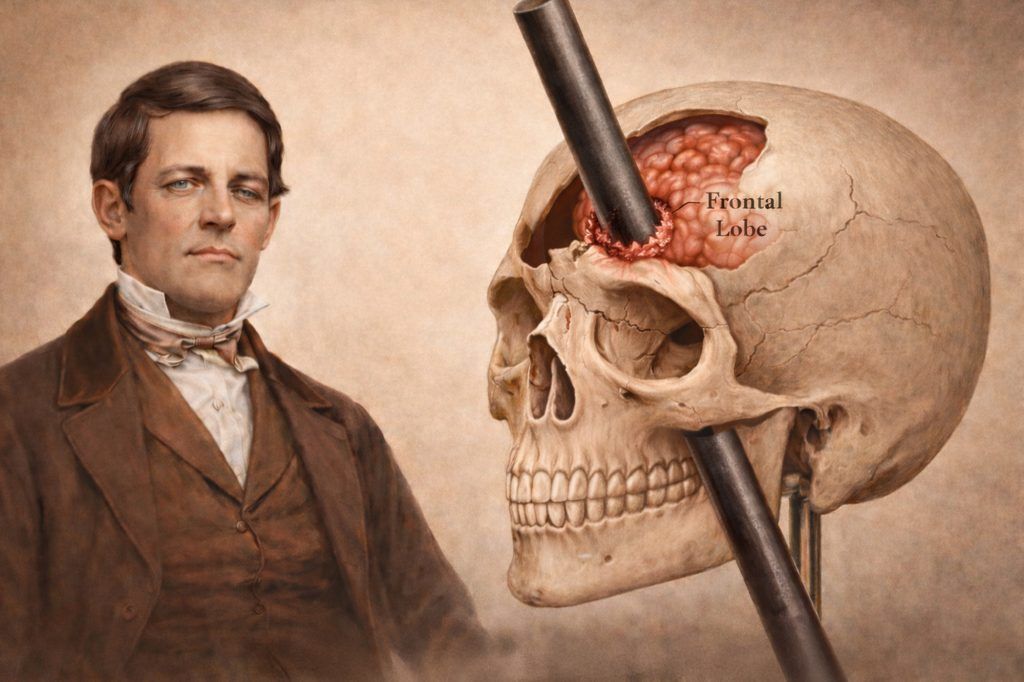
One of the clearest insights into this distinction comes from the world of neuroscience. In a well-known historical case, Phineas Gage, a railway worker survived an accident in 1848 in which an iron tamping rod he was using to pack down explosives was accidently fired through his skull, causing extensive damage to his left frontal lobe. Although Gage retained some ability to speak, his behaviour reportedly became more impulsive and less socially regulated. He become flustered quicker and swore more when his emotions boiled over.
Cases like Gage’s highlight something important. Even when higher-level control systems in the brain are disrupted, people can retain certain forms of speech, particularly those that are automatic and emotionally driven. More broadly, neuroscience has shown that individuals with damage to left-hemisphere language regions, sometimes losing the ability to produce structured, propositional speech, can still swear fluently when emotionally charged (Van Lancker Sidtis, 2010). Clear evidence that propositional speech and non-propositional speech rely, at least in part, on different neural systems.
This distinction becomes clearer when we consider how swearing functions in everyday language. Swearing is not limited to automatic outbursts. It can also be embedded within fully structured sentences, such as “that really f*****g hurts”. In this case, the swear word is integrated into propositional speech, shaped by grammar and intention. In contrast, a simple exclamation, “f**k!”, can be produced almost instantly, without conscious thought. The same word can therefore operate in two different modes: as part of a deliberate, propositional utterance, or as a rapid, non-propositional expression.
This dual role aligns with more recent accounts of swearing in cognitive science. Rather than treating swearing as a completely separate type of language, researchers have increasingly argued that it can recruit different neural systems depending on how it is used. As Benjamin K. Bergen notes in What the F, swearing does not rely exclusively on the left-hemisphere language network typically associated with propositional speech. Instead, it can also engage more distributed systems, including subcortical structures linked to habit and emotion.
Similarly, Emma Byrne, in Swearing is Good for You, emphasises the close relationship between swearing and emotional processing, particularly in contexts such as pain and stress. Taken together, these accounts suggest that swearing is not a separate system from language, but a flexible form of expression that can draw on both controlled, propositional processes and more automatic, emotionally driven ones.
Swearing as a form of speech provides a useful window into how language, emotion, and control interact in the brain. It demonstrates that not all speech is the product of careful, deliberate construction. Some forms of language are generated by faster, more automatic systems that are closely linked to emotional and habitual processes, while others depend on slower, more controlled processes associated with planning and inhibition. This is a key distinction because it helps us understand the context of our own research. We may show that swearing improves pain tolerance within a lab-based setting, but that’s using propositional speech and may not truly reflect how swearing in response to pain is generated in the brain in the real world.
Understanding this distinction does not just tell us about swearing, though. It highlights a broader point: language is not purely a rational, controlled system. It is also shaped by automatic processes that reflect our emotional and cognitive state. Expressive swearing sits at the intersection of these systems, offering a simple but revealing example of how the brain produces speech which other forms of language fail to reveal.