

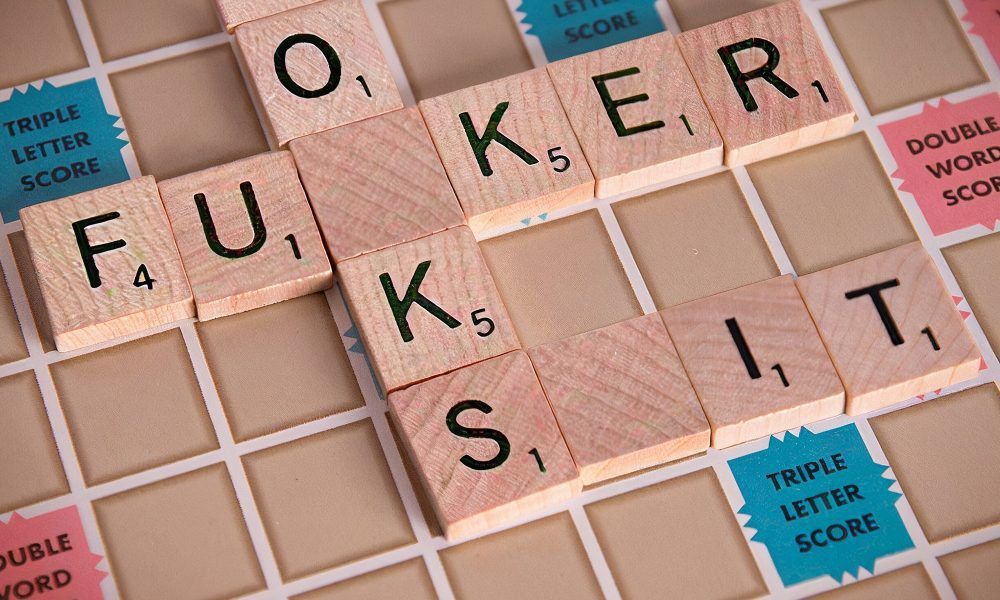

Swearing has had a reputation problem for a very long time. For decades, it has been perceived as a sign of laziness, poor education, and even low intelligence (Jay, 2009). The stereotype is simple, and widely accepted, people swear because they cannot think of a better word. Based on this view, swear words are treated as a kind of linguistic shortcut, used when vocabulary fails. However, modern psychological and linguistic research paints a very different picture, one that is challenging this assumption.
The idea that swearing reflects a lack of vocabulary is often referred to as the “poverty of vocabulary” hypothesis (Jay & Jay, 2015). It assumes that people fall back on swear words when they lack the linguistic resources to express themselves more precisely. Yet, when tested directly, the evidence consistently fails to support it. Jay and Jay asked participants to complete a series of verbal fluency tasks, including generating words beginning with specific letters, naming items within semantic categories, and finally, listing as many swear words as possible. If the stereotype were true, we would expect people who are good at producing swear words to perform poorly on the other tasks, because the stereotype assumes that swear words are used as a substitute for a broader lexical repertoire. In other words, individuals would rely on a small set of highly accessible taboo terms. Instead, the opposite pattern emerged: individuals who generated more swear words were significantly better at generating words in general (Jay & Jay, 2015). Or to put it more scientifically, swear word generation was positively associated with broader verbal fluency, contradicting the stereotype. A finding supported by Reiman & Earleywine (2023).
This finding is important because verbal fluency is not just a trivial measure. It is widely used in cognitive psychology and neuropsychology as an indicator of verbal intelligence, tapping into processes such as vocabulary size, lexical access speed, and executive control (Lezak et al., 2012). Performance on fluency tasks is also linked to working memory capacity, reflecting the ability to maintain and manipulate information while retrieving words from long-term memory (Rosen & Engle, 1997). If swear word fluency aligns with these abilities, it suggests that swearing is part of a well-developed linguistic system rather than evidence of its breakdown.
One potential explanation for the positive relationship between swearing and intelligence is that swearing is more complex than it appears. Swear words are not interchangeable fillers, they carry subtle differences in meaning, intensity, and social implication. Choosing the right swear word for a particular situation often requires the speaker to think about the context, audience, and intent they wish to convey. A word that comes across as humorous among friends might well be viewed as aggression if uttered in a professional setting. People must navigate these nuances in real time when choosing to swear. In fact, research suggests that swear words act as powerful expressive tools which
allow speakers enrich their speech with emotional intensity, emphasis, or social identity in a way that neutral language often cannot (Jay, 2009; Pinker, 2007). So, far from being a sign of linguistic laziness, swearing may suggest a sophisticated command of language.
Another key insight is that verbal fluency appears to reflect a general underlying ability rather than something specific to any one type of word. People who are good at generating words quickly are not just skilled in one category, but tend to show this ability across different kinds of fluency tasks. As Jay and Jay (2015) argue, fluency is fluency, regardless of whether the words in question are animals, adjectives, or taboo terms. People who can quickly generate words from one category are likely to do so in others because they have stronger semantic networks and more effective retrieval mechanisms. From this perspective, swear words are simply one category within a much broader linguistic system, and skill in this domain reflects general verbal ability rather than a lack of it.
Interestingly, there is also evidence that swearing is linked to certain personality traits, especially openness to experience and neuroticism, with studies showing positive associations between swear word use and traits such as openness and neuroticism (Jay, 2009; Reiman & Earleywine, 2023). While this does not mean that swearing causes these traits or that having these traits causes people to swear more, it does suggest that the people who are most comfortable using expressive language like swearing may also be those who are more engaged with language overall.
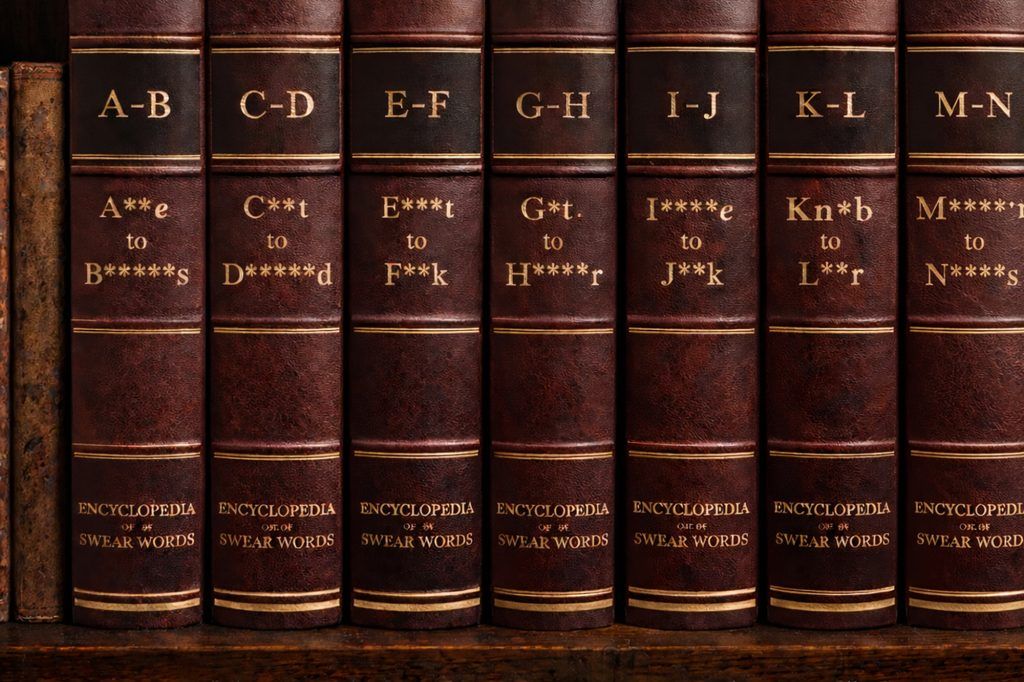
Despite the growing body of evidence, it is important to remember that a lot of this research is correlational rather than causal. This means that your ability to list swear words is not a direct measure of intelligence, and it would be misleading to claim that people who swear more are necessarily more intelligent overall. Intelligence is a multifaceted construct that includes many abilities beyond language, and verbal fluency represents only one component of it (Neisser et al., 1996). Moreover, there is an important distinction between how often someone swears and how many swear words they know. A person might swear regularly but use the same small set of swear words each time, leading to a poor result on a verbal fluency test, while another person might know a large and varied repertoire of swear words but choose to use them sparingly if at all. The key point being that listing words may relate to measures of intelligence but often it’s how and when those words are used that might better reflect someone’s true intellect.
To highlight this point, even with this research, the stereotype that swearing signals low intelligence remains common. However, this may be driven more by social norms than by actual ability. Swearing is often considered inappropriate in formal or professional contexts, primarily because it violates expectations of politeness and can lead to negative judgments about the speaker (Johnson, 2012). People who swear may, therefore, be perceived as less competent, even when their underlying abilities are unchanged (Johnson, 2012). At the same time, however, swearing can have the opposite effect, too. Research suggests that swearing can be used to express genuine, unfiltered emotions, and may therefore be perceived as a signal of honesty and authenticity, particularly in informal or personal contexts such as conversations with friends, social interactions, or emotionally charged situations (Feldman et al., 2017). Indeed, studies have found that individuals who use more profanity tend to be less likely to engage in deception and may be seen as more credible in these contexts, where directness and emotional expression are valued over strict adherence to social norms (Feldman et al., 2017).
Altogether, the evidence suggests that swearing is not a linguistic crutch but a component of a broader and more flexible language system. People who are skilled at using language tend to be skilled across multiple domains, including taboo language, and the ability to produce a wide range of swear words appears to be one reflection of this general fluency. While this does not mean that swearing is a marker of intelligence in any simple sense, it does challenge the long-standing assumption that it reflects a lack of it. Swearing is, therefore, potentially better understood not as “bad language,” but as a form of language tied closely to our emotions that we often turn to when we want to add an extra layer of social and affective meaning to what we say. When viewed in this light, the question is not whether intelligent people swear more, but whether we have underestimated what swearing reveals about the complexity of how humans use language.